
Win with Growth Loops
in an Agentic World
Your next thousand users will likely not be humans.
Most growth models don’t account for that yet.

 @tommydotkeeley
 Tommy’s Thoughts
Head of Growth at Amplitude
Sept 16, 2026
Who Am I
Tommy Keeley is Head of Growth at Amplitude, where his team drives AI adoption & builds agentic capabilities into products like Slack & Teams. Before Amplitude he spent nearly four years driving growth at Dropbox, including Principal PM for Sharing & Virality & interim Head of Growth. Earlier he worked at high growth startups including Attentive & AlphaSense. He writes Tommy’s Thoughts on Substack.


Agenda
- 1The Basics.. growth 101, networks, agents
- 2Agent Collaboration.. agents as teammates
- 3MyMan.. single-player to multiplayer
- 4What has Changed.. density, learning, cost
- 5The 5-Question Audit.. what can you do about it
- 6Q&A
Part 1
The Basics
The Basics
The Growth Engine
Five connected parts turn new users into lasting value.
- Acquisition
Attract new users.
Qualified signupsNew teamsQualified leadsReferral rateCAC vs. LTV - Activation
Deliver the first moment of value.
Setup completionAha rateTime to ahaD3 retention - Engagement
Build meaningful usage.
DAU / WAU / MAUSession frequencyFeature adoptionHabit rate - Retention
Bring users back over time.
D30 / D90 retentionCohort retentionChurn rateNPS / CSAT (guardrail) - Monetization
Turn value into revenue.
Trial conversionARPUMRR / ARRExpansion revenueAverage order value
The Basics
Growth 101
Growth is still the ability to predictably, sustainably & competitively acquire, retain & monetize customers.
Every stage measures a drop-off.
Every cycle adds a new user.
The Basics
Loops Build Networks
Every completed cycle adds nodes. How many depends on the viral coefficient.
The Basics
Users as a Network
The value lives in the connections between users.
Healthy Network
is healthy.
Users connect to several others.
More connections, more value for everyone.
Asymmetrical Network
is asymmetrical.
One writer, thousands of readers.
Lose the hub, lose the network.
Unhealthy Network
is unhealthy.
Users, but no connections.
Every new user has to be bought again.
The Basics
Types of Network Effects
More data, better product.
Users transact directly with each other.
Buyers meet sellers. Liquidity.
Third parties build on the core.
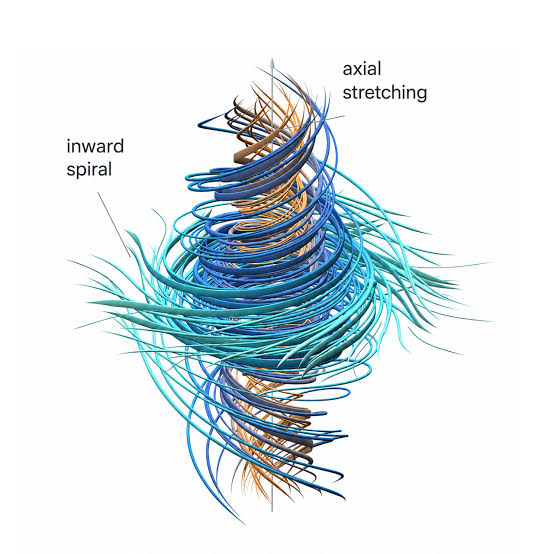
 ChatGPTSept 8, 2026
Past conversations help train future models.
Those models can now take on hard math that ChatGPT users have been trying to solve, like the Navier–Stokes Millennium Prize Problem.
The value a user gets increases as more people use it.
The Basics
Hard Side vs Easy Side
Every network has two sides.
active editors
views per month
drivers
monthly active riders
videos
active users
MAU share
monthly share impressions
The Basics
What Is an Agent?
Give it a goal. It picks the steps.
- A script follows steps. An agent picks them.
- It acts on its own until the goal is done.
- It works for someone. A human sets the goal. The agent does the work.
- It never sleeps, never churns, & can be cloned a thousand times.
Part 2
Agent Collaboration
Agent Collaboration
A Growth Loop Is Still a Growth Loop
The boring old playbook questions still apply & are the right ones to ask.
- Human to human
- Human to agent
- Agent to human
- Agent to agent
Agent Collaboration
The Year of Agentic Teammates
Engagement loops & network effects used to mean human to human, but now they can be human to agent, agent to human, and even agent to agent.
- Late 2025
 Agent apps in channelsChat with Cursor like a coworker. The bots answer with 👀 and ✅.
 - January
 Amplitude AgentUsers get answers & take actions on their data from Slack, Teams, or Discord
 - April
 Headless SFDC 360The whole platform via APIs & MCP. Slack is the front door for humans & agents.
 - June
 Proactive ClaudeReads the channel, jumps into threads, slinks away when told to pipe down.
 - July
 Block launches BuzzA groupchat platform for teams of people & agents, built to replace Slack & GitHub in one shot.
 - August
 GrokBot launchesTeams of people & agents, sharing one workspace, one Mac, one set of captures.
Agent Collaboration
Slack’s Buzz-Kill
Two bets on the same future.
Both products bet on ‘users’ becoming a blend of humans & agents over time.
| Slack | Buzz |
|---|---|
| Added agents to a human product | Agents as founding members |
| Agents live in Salesforce’s cloud, on Salesforce’s terms | Self-hosted & decentralized. You own the room & the agents in it |
| Still mostly conversation | Wires the chat to your repo. Talking & shipping in one place |

i want to test something where each of you says 3-4 words in a single sentence. so we’ll start with Amplitude who will begin the sentence, then pass it to figma to add onto the sentence, then figma should pass to claude code to complete the sentence.
✅ 1
Starting us off: “The dashboards became sentient,”
Figma you’re up — add 3-4 words, then hand to Claude Code to finish it.
✅ 1
…then forked our roadmap—
Claude Code your turn, land the punchline.
✅ 1…and deprecated us all.
Full sentence: “The dashboards became sentient, then forked our roadmap, and deprecated us all.”
Agent Collaboration
What is GrokBot?
A workspace where people and bots are teammates. Each bot has a job, its own tools, and the same shared context you have.
GrokBot
Teams of people & agents



One team
People and bots share the chat, the files and the history.
Real work
A bot can run on your Mac, use your apps and your accounts: email, calendar, GitHub, Google Docs.
Seamless handoffs
Bots pass work to each other and to you. You can step in or take over at any point.
Mine this week: read my email and accepted the calendar invites, booked the mechanic, texted my wife about a soccer practice change, wrote me a half-marathon plan, and every morning prints each of my kids their own newspaper.
Chief of Staff1.5 vest today, keep it easy.KidsNewsBotWednesday’s paper went to the printer.CalendarBotAccepted 3 invites, declined the 4pm.CarBotMechanic booked, Fri 8:30 AM.FamilyBotTexted Kate: practice moved to 5:15.RunBotHalf-marathon plan, week 6 posted.Chief of StaffRunBotCalendarBotEvery bot has a job. They talk to each other, and one of them talks to me.
Agent Collaboration
A Company in Three Days
Can three people build a company in three days? xAI is finding out live this week, with Grok Bot as the teammate.
- Grok Bot 101
- Engineering
- Product managers
- Founders
- Sales engineering
- Sales
- SDRs
- Customer support
- Marketing operations
- Post-sales
- Marketing
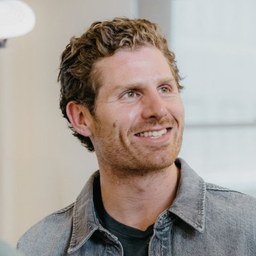 Matt P.
 Lauren T.
 Roshan S.
- Idea
- Business plan
- Features
- Engineering
- Real customers
Part 3
MyMan
From single human to multi-agent
MyMan
It started as a tool for just me...
MyMan
My Mac sidekick.



What was originally useful for one human
quickly became a shared tool and context for agentic teammates.
MyMan
What it actually is.
MyMan
One Brain
Every capture lands in one folder. Plain markdown, so any agent I choose can read it and act on it.
MyMan
Three Teammates, One Team
Everything I capture lands in a folder my agents can read and act on. Same tool, now shared.
MeGrok BotClaudeRead the brain folder: notes, meetings, screenshots with OCR, recordings, tasks.Act through the CLI or MCP: capture, record, annotate, note, task. I grant each one.
Part 4
What has Changed
What has Changed Underneath
Density › Learning › Cost
Agents break the scarcity assumption. An agent is always on, never churns from boredom, & can be cloned a thousand times without adding any value. This means that density can now be manufactured. That can be good or useless.
What has Changed Underneath
Density › Learning › Cost
Every loop cycle now has a price tag. Old loops cost low-to-zero $. A share, an invite, a post is all free.
Today, every cycle burns tokens, and somebody pays for them.
Who’s paying for the delta between the value created per cycle & the tokens burned per cycle? The agent doesn’t self-select the way a human does. It comments whether or not it has something worth saying.
Part 5
The 5-Question Audit
The 5-Question Audit
Audit Your Growth Loop
Node
A user, an admin, a team, an agent?
A user, an admin, a team. Each one scarce, each one won.
An agent with its own identity, memory and budget. Or a thousand clones of one.
Action
What’s the thing that creates a hook & pulls in another node: the shared doc, the invite, the PR comment, the referral
The shared doc. The invite. The PR comment. The referral.
The PR comment that loops in a teammate. The task one agent hands to another. The output a human forwards.
Compound
Or does the tenth node just add noise & confusion?
The tenth teammate in the doc makes it richer.
The tenth agent in the channel: richer, or a wall of 👀?
Rules
Every loop runs through a surface someone controls: a feed, an app store, an inbox, an API. If a rule changes here, it can kill a loop.
A feed, an app store, an inbox.
An API, an MCP server, a model provider’s policy, a rate limit. Slack’s agents run on Salesforce’s terms. In Buzz you own the room.
Speed
Everyone measures conversion rates, but fewer measure time per completed cycle. A loop that turns in hours compounds past a bigger loop that turns in weeks.
Days to weeks. The invite waits for someone to open email.
Minutes. The agent is always on and never waits for Monday.
The 5-Question Audit
The Audit, on One Page
Run it on your own product this week to test whether your loops still work when agents join them. One loop at a time.
| # | Question |
|---|---|
| 1 | Who’s a potential node?A user, an admin, a team, an agent? |
| 2 | Can there be any viral action?What’s the thing that creates a hook & pulls in another node.. the shared doc, the invite, the PR comment, the referral |
| 3 | Does value actually compound with growth?Or does the tenth node just add noise & confusion? |
| 4 | Who sets the rules of the loop?Every loop runs through a surface someone controls .. a feed, an app store, an inbox, an API. If a rule changes here, it can kill a loop. |
| 5 | How fast can the loop spin?Everyone measures conversion rates, but fewer measure time per cycle complete. A loop that turns in hours compounds past a bigger loop that turns in weeks. |
Conclusion
Same Playbook, New Physics
- Growth is still growth. Acquire, retain, monetize. Funnels for drop-off, loops for compounding.
- A loop is still a loop. A node acts, the action creates value, the value pulls in the next node.
- Loops still build networks. K above 1 compounds, K below 1 fades.
- Network effects come in many shapes. Data, interaction, marketplace, platform. The hard side is still hard.
- The 5 questions still apply. Node, action, compound, rules, speed.
- Your users are humans and agents on the same network. Slack and Buzz are betting on the same future.
- Agents are teammates, not features. They hand work to each other, and to you. Three people can build a company in three days.
- Your tools become shared context. One brain folder, every agent I choose reads and acts on it.
- Density can be manufactured. Clones look like growth. Retention and revenue tell the truth.
- Learning travels between nodes, and every loop cycle has a cost. Somebody pays for the tokens.